
THE ESTATE
A reflection of the era and the character of the place
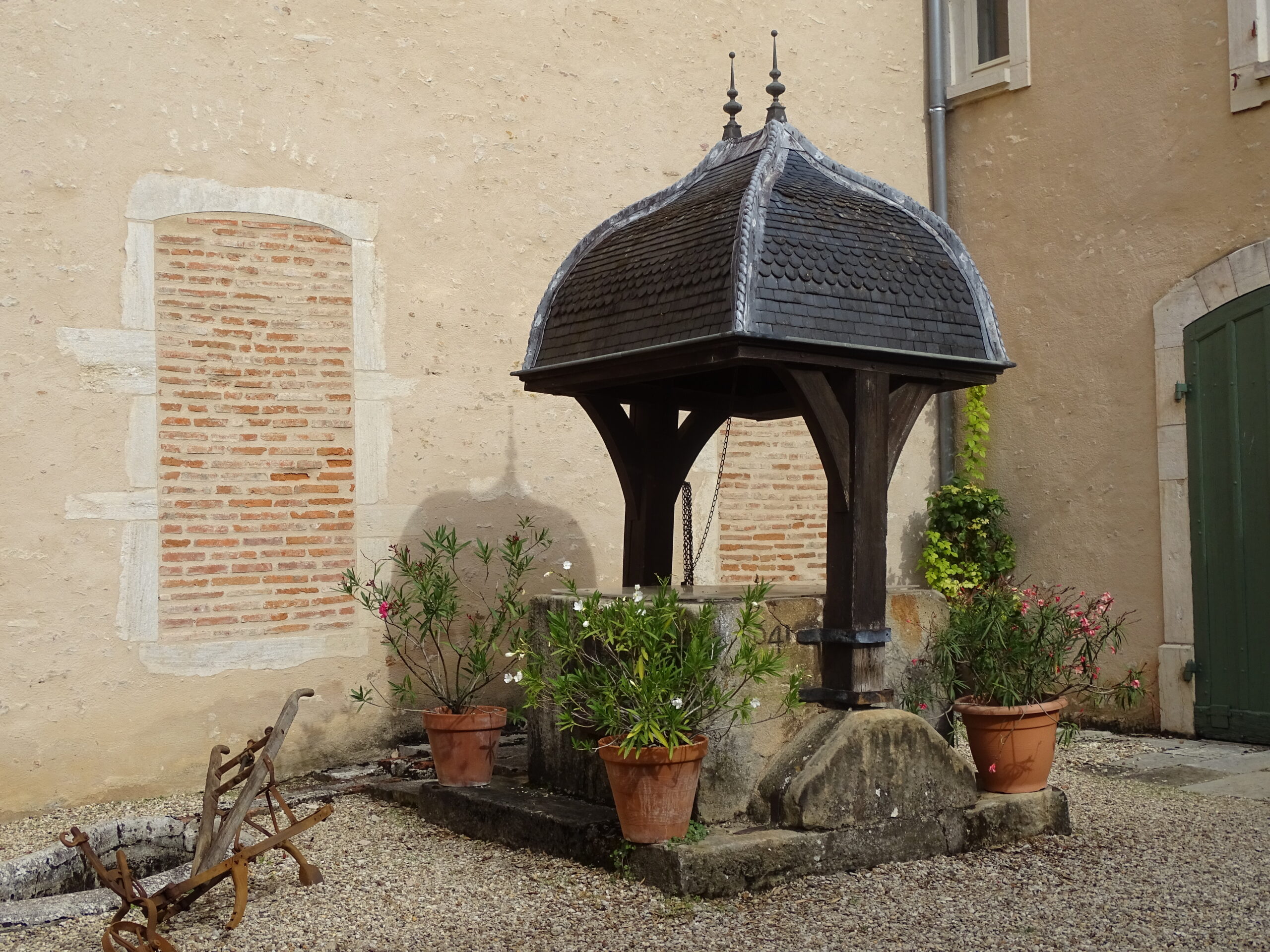
As you pass through the estate’s gateway, you’ll discover a charming inner courtyard lined with buildings dating from the early 17th century. At the far left, you’ll spot a well that’s particularly typical of the region; this well has quite a history. Dug in the Middle Ages to a depth of 22 metres, it is unique in that it was built on a stone slab. Constructed entirely of dry stone, it was in use for many centuries.
Find out more
Its well curb bears the date 1641. It was not until this date, towards the end of the reign of Louis XIII – son of Henri IV – that this well was embellished with this stone curb and its slate roof. This coincides with the completion of construction work on the estate.
ABBÉ COURTÉPÉE WROTE IN 1778
that in the past, in Pommard, water was very scarce… and that there were only four wells and one river for this large village of 1,200 souls (twice the current population).
EARLY 20TH CENTURY
the arrival of running water. Used until 1906–1907, when running water was installed in Pommard, it has since served a decorative purpose. The roof was last renovated in 1980. The style and materials have been scrupulously preserved.
THE ESTATE’S WELL, OUR SYMBOL
The Montjeu fiefdom in Pommard
The estate’s history dates back to the era of the Dukes of Burgundy (1000 to 1400).
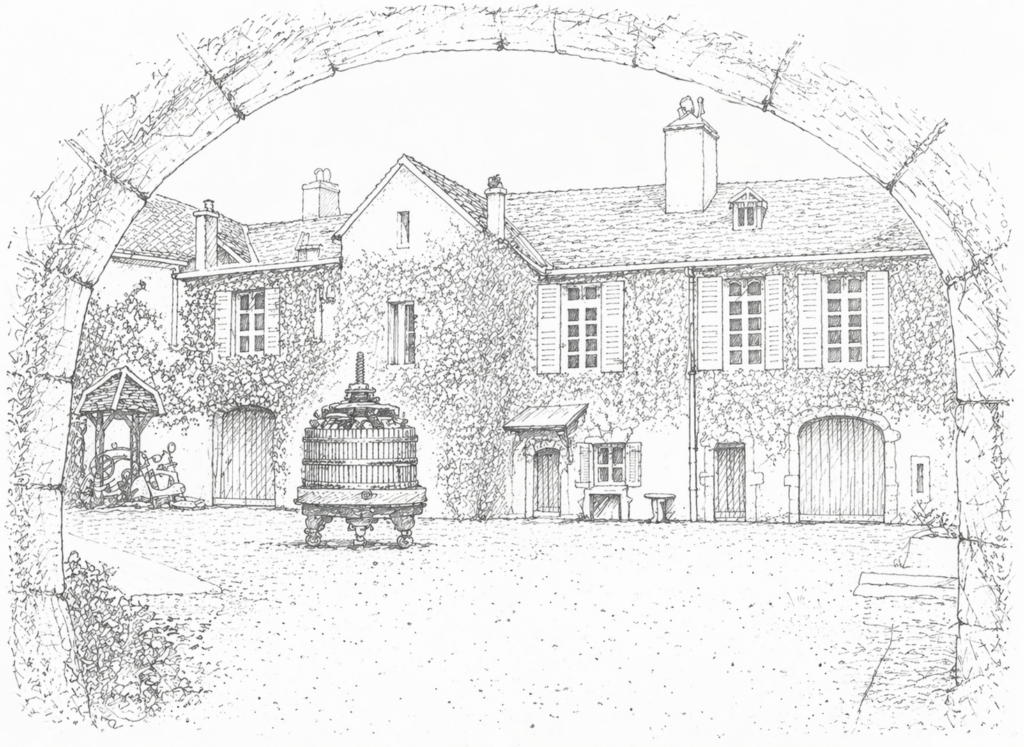
The site was formerly home to the Fief de Montjeu, which comprised buildings, a chapel and a fairly extensive ‘pourpris’ (an Old French term meaning ‘enclosure wall’).
This covered an entire district of Pommard, surrounded by moats which were filled in during the French Revolution.
The Lords of Montjeu and their family thus ruled in succession for several centuries. The origins of the present buildings date back to 1610, the year of Henry IV’s death.
The date on the well at Domaine Coste-Caumartin, at the far end of the courtyard – 1641 – would suggest that this was when the work was completed.
It was in use until 1906–1907, when running water was installed in Pommard, and has served a decorative purpose ever since. The roof was last renovated in 1980, with the original style and materials meticulously preserved.
1794-1864
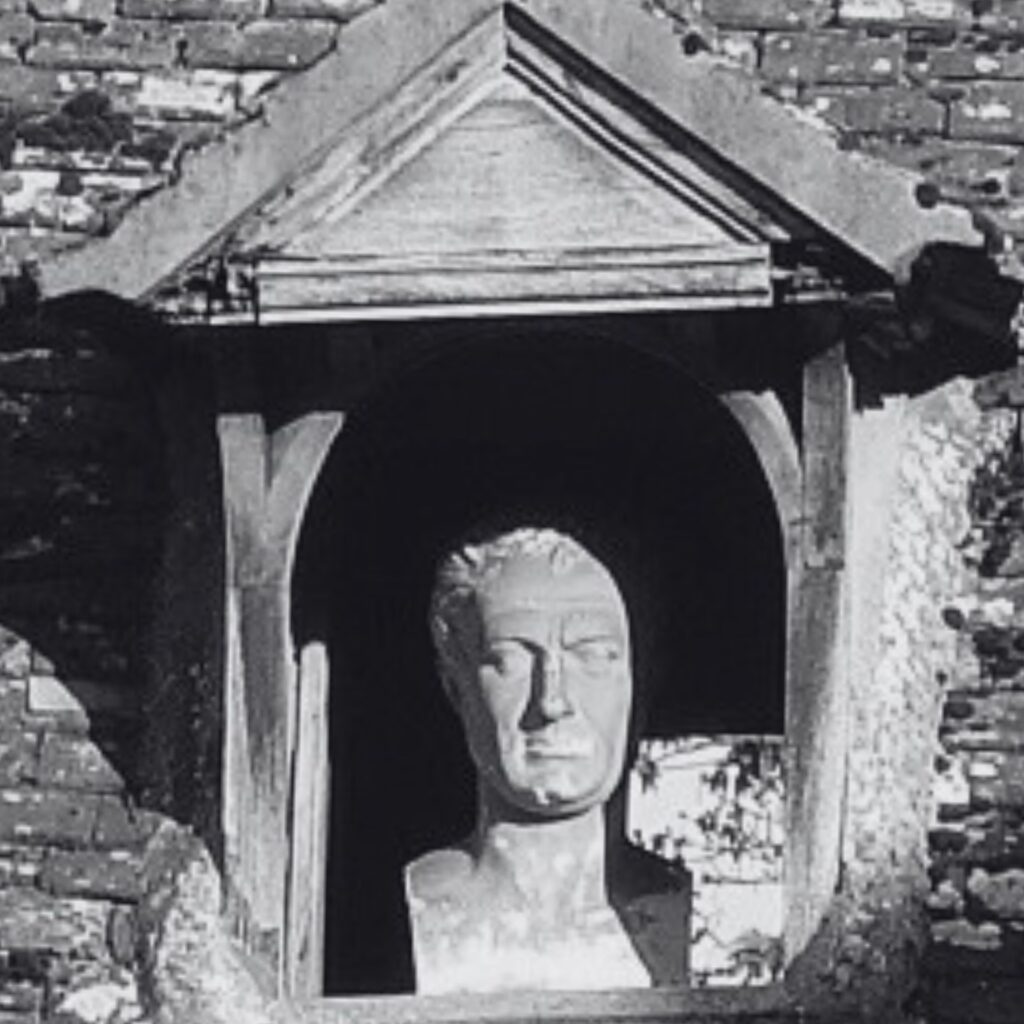
The Coste family was initially best known for its work as master blacksmiths, a trade they developed on an industrial scale over two centuries – until 1971 – notably through the manufacture of ‘Coste-Caumartin’ stoves and cookers, which were well known throughout the eastern part of France.
At the same time, they maintained the estate’s vineyards, which in 1892 stretched across the communes of Pommard, Volnay and Givry. The estate’s reputation was already very strong at that time, having won numerous medals, including a gold medal at the 1900 Paris World’s Fair.
The estate was originally passed down through the female line: the Coste, Debrois and Chenot families, followed by the Sordets for the past three generations, have succeeded one another to this day.
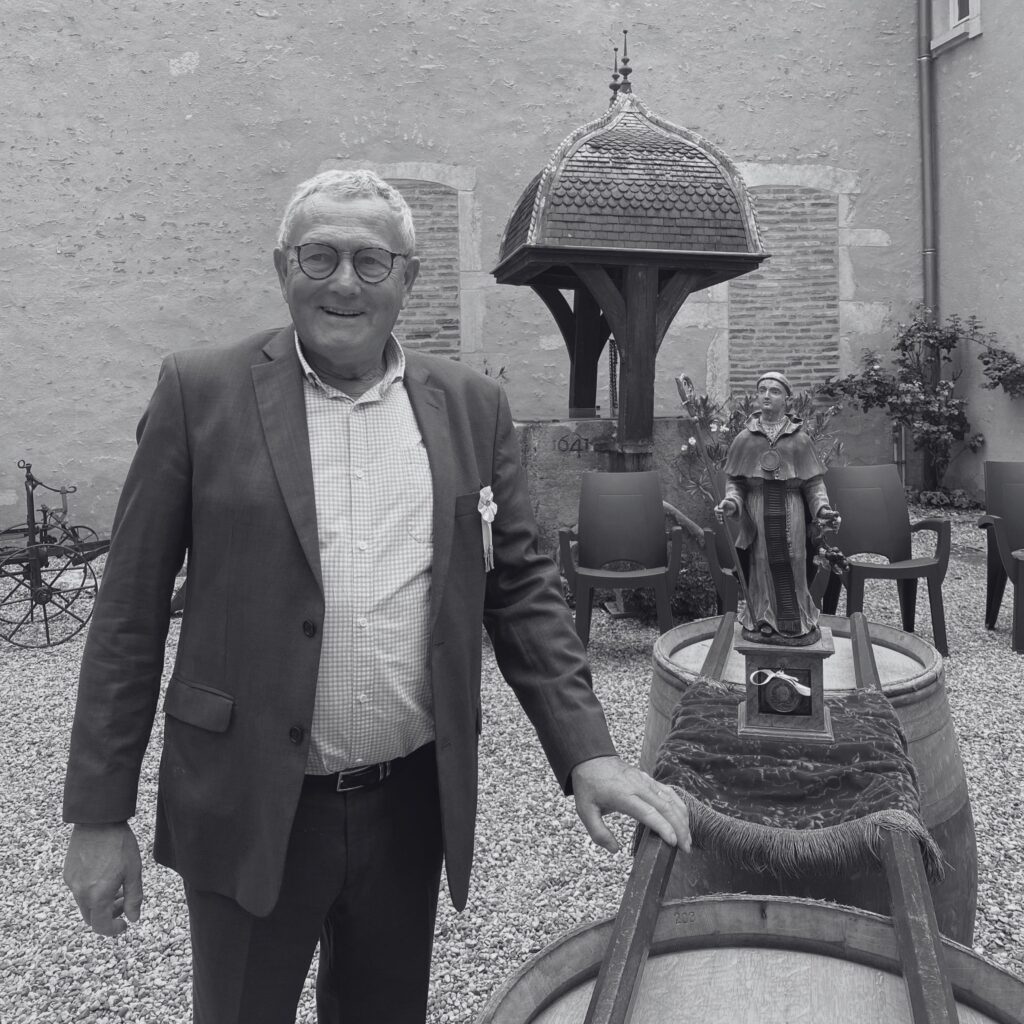
Jérome Sordet, who was awarded the St Thibault by the Pommard Winegrowers’ Guild on 4 July 2022
1988
The estate is enjoying a renaissance under the management of Jérôme Sordet, who, after running a timber business, has devoted himself fully to the family vineyard alongside his wife Marie-Cécile since 1988.
He has gradually developed his own style, producing wines that remain true to their terroir. The estate quickly regained its former reputation, enabling Jérôme to diversify and expand the vineyard from 9 to 12 hectares.
Between 1995 and 1998, two appellations were added to the estate: our plot of Beaune 1er Cru Les Chouacheux and Saint-Romain Le Clos du Château – Monopole. The estate now covers an area twice the average size of vineyards in the Côte d’Or.
Back in 1996, Jérôme Sordet set up a wine trading business to diversify and offer his customers a selection of fine Burgundy wines to complement their existing range.
Then, in 1998, in order to modernise the estate and adapt it to the increase in production, he built a 400 m² cellar and wine-making facility.
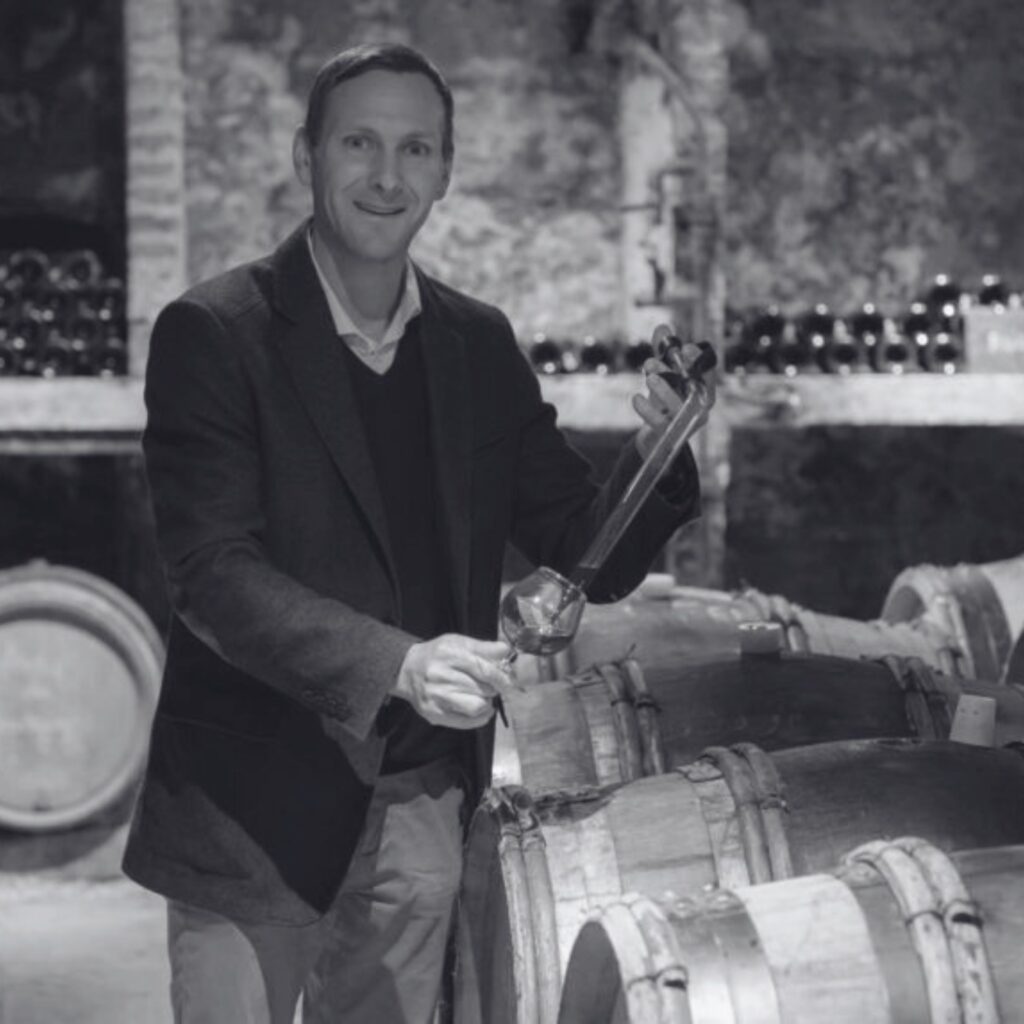
Benoît Sordet, 7th generation
of the estate
2014
In 2012, after several years working as an electrical engineer, Benoît Sordet began a viticulture and oenology course at the CFPPA in Beaune, with the aim of taking over the family estate. During this two-year work-study programme, he drew up his business plan, which included investments to improve quality and expand the estate.
The son of Jérôme and Marie-Cécile Sordet and one of five siblings, it was only after obtaining his BPREA (Professional Certificate in Agricultural Business Takeover) on 1 November 2014 that he settled permanently at the estate.
His installation project then began to take shape:
– Improvements to the grape reception process through the investment in a sorting table and bins that better preserve the quality of the grapes, thereby allowing more aromas to develop.
– Involvement in the development of winemaking software.
– Expansion of the vineyard area in Saint Romain, with the planting of 0.58 ha of Chardonnay, bringing the estate’s total vineyard area to 12.78 ha.
Benoît therefore carried out his first winemaking for the estate with the superb 2015 vintage and has refined his style over the years, producing wines that are true to their terroirs and characterised by great finesse and elegance.
Today, Domaine Coste-Caumartin produces around 60,000 bottles a year, of which 30% are white wine and 70% are red wine.
ANY QUESTIONS ?
Opening hours, bookings, tastings, deliveries… Find the answers to your questions in our FAQs!